As artificial intelligence technology rapidly evolves, computing power has emerged as the forefront of global technological competition and a key driver of high-quality economic and social development. During the "14th Five-Year Plan" period, China’s computing power industry has developed rapidly, with its infrastructure ranking among the top globally. However, this booming industry also faces challenges including inefficient computing power monitoring, incomplete supply-demand information, lack of overall planning in resource allocation, and insufficient ecological synergy. Meanwhile, the demand for computing power is growing, with increasingly higher standards and more complex application scenarios.
To break through development bottlenecks and promote high-quality growth of the computing power industry, the China Academy of Information and Communications Technology (CAICT), under guidance of the Ministry of Industry and Information Technology (MIIT), has been steadily advancing the construction of the China Computing Power Platform since 2017. As a national-level comprehensive computing power service platform, the China Computing Power Platform (https://a.hcp.ac.cn) integrates "supply, demand, and service" functions, enabling compatibility and interoperability among different systems, platforms, and tools. It is committed to creating a "neutral, open, fair, and trustworthy" service ecosystem for all parties involved in computing power supply and demand, further promoting efficient resource allocation and value realisation to make computing power services truly inclusive, convenient, and accessible.
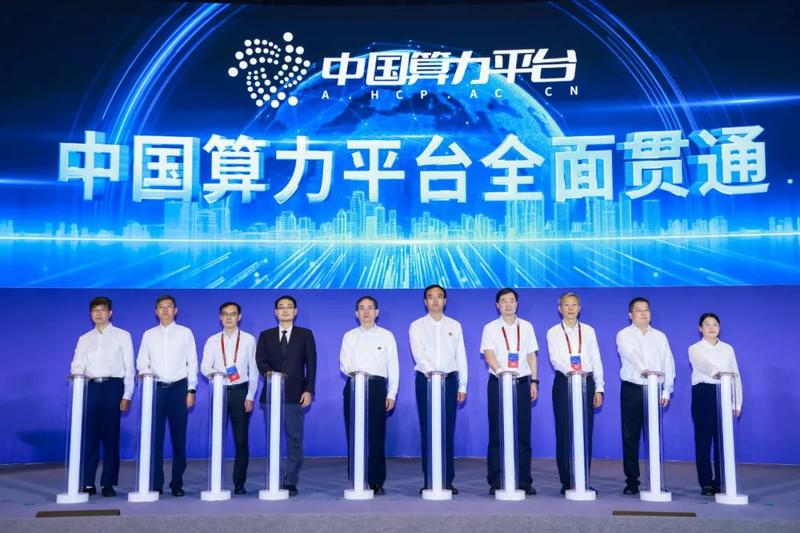
2025 China Computing Power Conference: China Computing Power Platform Achieves Comprehensive Integration
The China Computing Power Platform has now successfully achieved "Five Major Integrations": platform integration, entity integration, resource integration, ecological integration, and scenario integration. Among these, "ecological integration" refers to building a computing power ecological community. By leveraging platforms such as the Computing Power Advanced Matrix and the Intelligent Computing Ecosystem, it promotes deep linkage among industry, academia, research, and application, forming a coordinated and unified "computing power ecosystem."
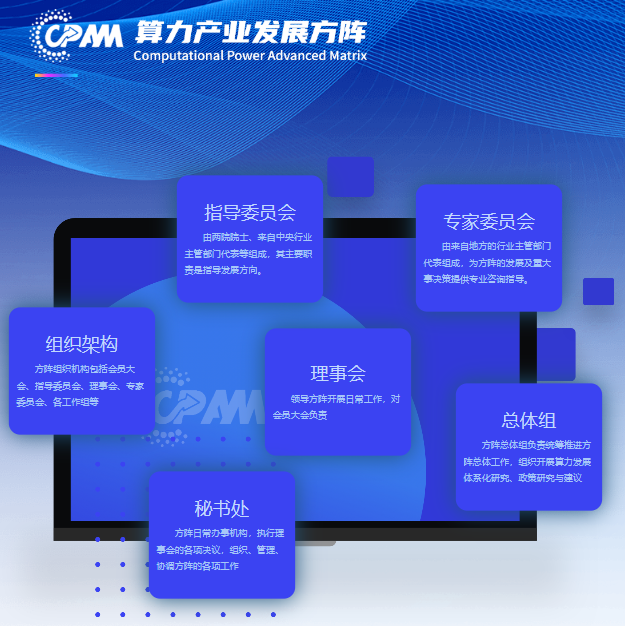
The "Computing Power Advanced Matrix" focuses on computing power industry research, application cultivation, collaborative innovation, and international cooperation to promote communication and deep collaboration within China"s computing power industry, drive breakthroughs in core technologies, strengthen the matching of resource supply and demand, form cross-industry complementary advantages, and advance the high-quality development of China’s computing power.
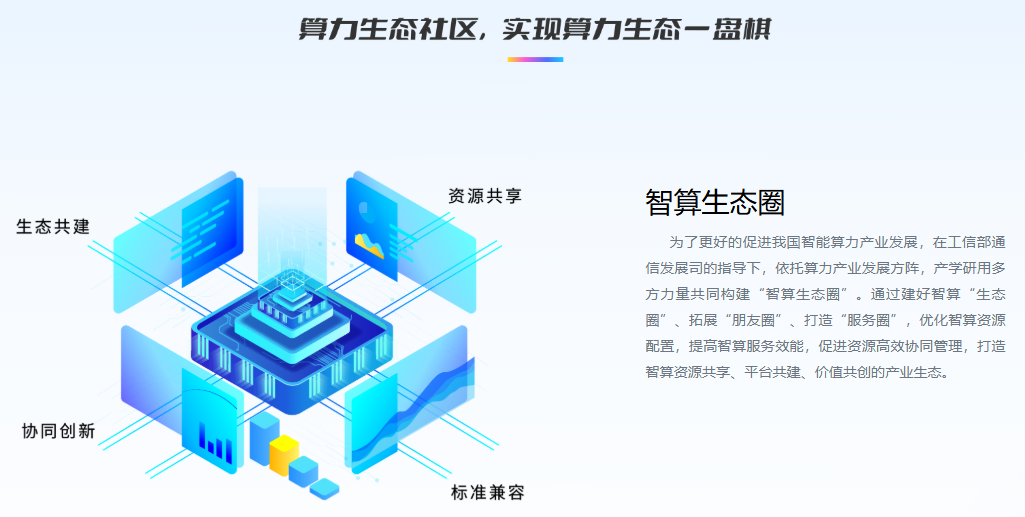
The "Intelligent Computing Ecosystem" focuses on intelligent computing ecosystem construction, technology research, and standards specifications, aiming to promote rational layout and full utilisation of intelligent computing resources, drive technological innovation, industry empowerment, and application implementation. At the industry level, ecological construction is carried out through the Computing Power Advanced Matrix; At the technology level, relying on the China Computing Power Platform, it conducts software-hardware collaborative verification of remote, heterogeneous, and cross-domain intelligent computing resources, forming a unified architecture integrating suppliers, demanders, and service providers.
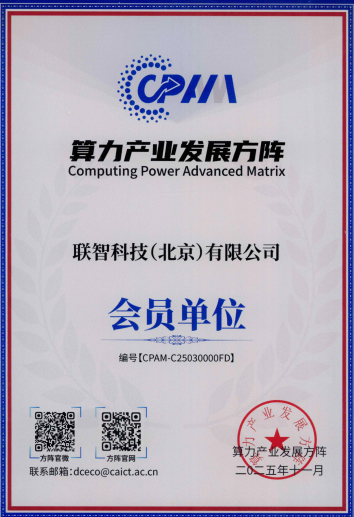
As a provider of full-process solutions for HPC/AI computing power construction, ClusterTech Beijing Limited has officially become a member unit of the "Computing Power Advanced Matrix" and has simultaneously joined the "Intelligent Computing Ecosystem" on the China Computing Power Platform, contributing to the construction of a national integrated computing power network and promoting vibrant development of the computing power industry ecosystem.
Adhering to the principle of “starting from business needs with and centering on applications," ClusterTech Beijing Limited provides users with full-process solutions for HPC/AI cluster construction including planning and design, environment setup, and unified management. Through architectural design, cluster deployment, platform construction, application integration, performance optimisation, and service operations and maintenance, the company helps users reduce the difficulty of HPC/AI cluster construction, eliminate application software performance bottlenecks, address complex cluster management requirements, lower high cluster operation and maintenance costs, and ensure secure cluster operation and stable business development.
In terms of computing power platform support, ClusterTech Beijing Limited’s self-developed HPC/AI converged computing power management platform, CHESS, has achieved a true deep integration of Slurm and Kubernetes. It creates an integrated computing management platform suitable for both HPC applications and AI workloads. It handles resource allocation and job scheduling between HPC and AI workloads, meeting requirements for centralised management, efficient utilisation, and diversified synergy of both HPC/AI computing resources, supporting complex business scenarios including scientific computing, engineering simulation, and AI training and inference.
Looking ahead, ClusterTech Beijing Limited will unite multiple forces from government, industry, academia, and research, integrate high-quality resources, continuously improve the technical level of computing power services, create more flexible and user-friendly computing power products, and work together with the "Computing Power Advanced Matrix" to promote the construction of a national integrated computing power network and contribute to the vibrant development of new computing power service formats.


